
From childhood through to older adulthood, looking after your gut health is important at every stage of life. So, who can drink Yakult? Let’s explore how Yakult can fit into different life stages, including pregnancy and breastfeeding, and what to keep in mind for you and your family.
A Bottle for Different Stages of Life
Yakult is a probiotic fermented milk drink containing the unique Lacticaseibacillus paracasei Shirota (LcS) strain. Research into the LcS strain and its potential role in gut health has been ongoing for more than 90 years (1).
In Australia and New Zealand, Yakult is available in two varieties: Yakult Original and Yakult LIGHT. Each 65 mL bottle contains at least 6.5 billion live LcS bacteria. Yakult LIGHT offers 75% less sugar and 40% less calories than Yakult Original, with the same number of live LcS bacteria per bottle (2).
We recommend one bottle a day as a simple way to make probiotics part of your everyday routine (3). The LcS strain has three key benefits (4):
- Survives the digestive process and reaches the intestines alive.
- Can alter and increase the number of beneficial bacteria in the intestines.
- Supports regular bowel movements by improving stool consistency.
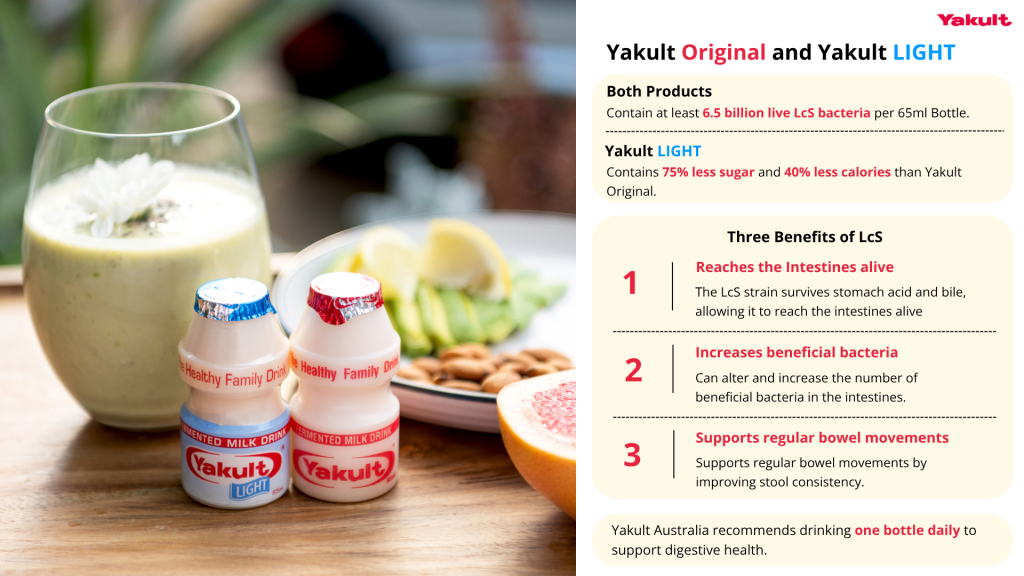
Figure 1. The three key benefits of the LcS strain in Yakult Original and Yakult LIGHT
Can Babies and Young Children Drink Yakult?
Starting solid foods is an exciting milestone that introduces children to a wider variety of tastes, textures, and nutrients. During this transition, their eating patterns and bowel habits may also change, and some children may experience constipation (5).
Research involving young children suggests that regular consumption of fermented milk containing LcS may help support beneficial bacteria in the intestines and healthy bowel habits (6,7).
Children can enjoy Yakult once they have started eating solid foods and are eating a varied diet, provided they can safely consume cow’s milk, without any allergies or sensitivities. Parents may choose to offer a smaller amount or dilute it for younger children (3). For example, parents can mix equal parts Yakult and water at body temperature, offer a small amount using a spoon and observe how their child tolerates it (8). Importantly, Yakult should not replace breast milk, infant formula, or nutritious meals. Parents who are unsure whether Yakult is suitable for their child should speak with a healthcare professional.
Can School-Age Children and Adults Drink Yakult?
As children grow up, they become more independent in their food choices. Study, work, travel, and other commitments can also influence what and when we eat. Across these stages of life, maintaining balanced eating patterns and healthy bowel habits remains an important part of everyday wellbeing.
Including Yakult as part of your daily routine is a simple way to enjoy the benefits of LcS strain. It can be consumed at any time of day, either with a meal, snack or on the go. When packing Yakult in a school or work lunchbox, keep it chilled in an insulated lunch bag with an ice pack until it is ready to drink (3).
Can You Drink Yakult During Pregnancy and Breastfeeding?
During pregnancy, hormonal, metabolic, and immune changes occur alongside changes in the gut microbiota — the community of microorganisms living in the gut. The microorganisms interact closely with the mother’s metabolic and immune function and may also contribute to the baby’s early immune development (9,10). After birth, breast milk provides microorganisms and other bioactive components that may contribute to the development of baby’s gut microbiota and immune system (11).
A balanced diet that includes soluble and fermentable fibre can help support gut health during pregnancy (12). Probiotics may also be included in the diet to help pregnant women restore gut microbiota and relieve constipation, although their potential benefits depend on the strains used. Research is continuing to clarify their role during pregnancy and breastfeeding (9,13).
The LcS strain in Yakult can be safely enjoyed during pregnancy and breastfeeding as part of a balanced diet (3). Anyone with gestational diabetes or other medical or dietary concerns should seek individual advice from their General Practitioner or an Accredited Practising Dietitian.
Can Older Adults Drink Yakult?
As we age, the diversity and composition of the gut microbiota may change. Diet, medications, living environment, and overall health can all influence the gut microbiota in older adults (14,15). Constipation is also common in older adults, with reduced physical activity, certain medications, and chronic health conditions potentially contributing to its development (16).
For older adults, research on fermented milk containing the LcS strain has examined bowel movement frequency and stool consistency (17,18).
There is no general upper age limit for enjoying Yakult. Older adults can also enjoy Yakult as part of a balanced diet, while taking their individual dietary and health needs into account. Those with diabetes, swallowing difficulties, or other medical or dietary concerns should seek individual advice from their General Practitioner or an Accredited Practising Dietitian.
Yakult: Allergies, Dietary Requirements and Medical Considerations
Everyone is different, and factors such as age, allergies, intolerances, dietary preferences and individual health needs can influence whether Yakult is suitable for them.
Individual Considerations | Key Information |
Cow’s milk protein allergy | Both Yakult Original and Yakult LIGHT contain skim milk powder and are not suitable for those allergic to cow’s milk protein (3). |
Lactose intolerance | Both varieties contain less than 2 grams of lactose per 65 mL bottle (3). They may be tolerated by some people with lactose intolerance, but individual tolerance varies. |
Coeliac disease | Both varieties are gluten-free and suitable for people with coeliac disease (3). |
Vegetarian or vegan diet | Both varieties are suitable for vegetarians who consume dairy products. They are not suitable for a vegan diet because they contain skim milk powder (3). |
Diabetes | People with diabetes can enjoy Yakult as part of a healthy diet. For a lower-sugar option, Yakult LIGHT contains 75% less sugar and 40% fewer calories than Yakult Original (3). Check the nutrition information panel and discuss your individual needs with a General Practitioner or an Accredited Practising Dietitian. |
Antibiotic use | Antibiotics can disrupt the balance of bacteria in your gut by affecting both harmful and beneficial bacteria (3). Consuming a probiotic such as Yakult before, during and after a course of antibiotics may help support a balanced gut microbiota. However, the effects of probiotics can vary depending on the strain and individual circumstances. We recommend consulting your General Practitioner or pharmacist before consuming Yakult while taking antibiotics. |
Other medical conditions | Seek advice from your healthcare team before consuming products containing probiotics. |
Conclusion
From childhood to older adulthood, Yakult can be part of a balanced diet across different stages of life, including during pregnancy and breastfeeding. As individual needs vary, it’s also important to consider allergies, dietary requirements and health conditions.
To help you make an informed choice, we’ve summarised some key dietary and health considerations to keep in mind when enjoying Yakult.
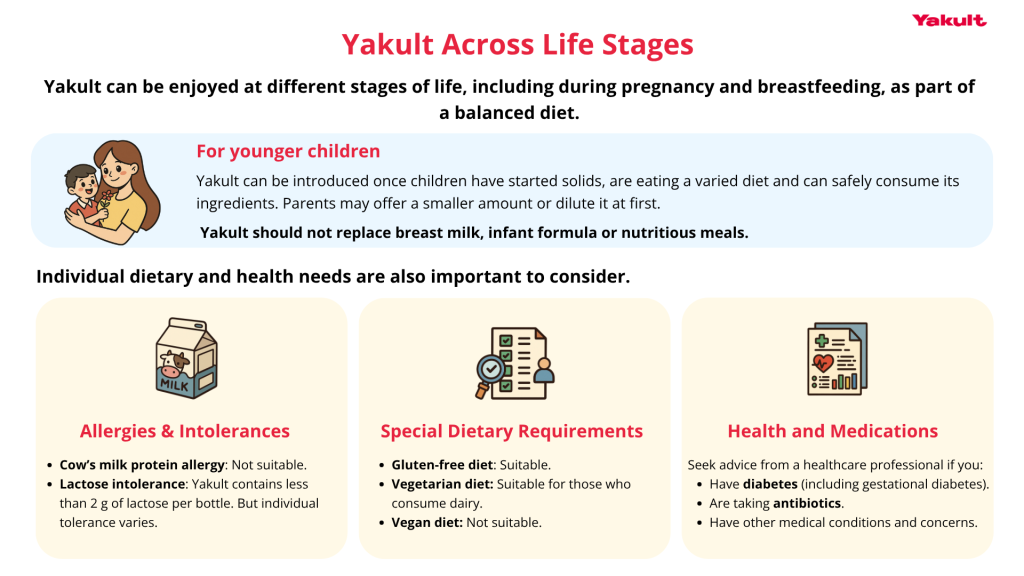
Figure 2. Yakult Across Life Stages: Key Considerations

References:
- Yakult Australia. Yakult history and timeline [Internet]. Dandenong South (VIC): Yakult Australia Pty Ltd; [cited 2026 Oct 25]. Available from: https://www.yakult.com.au/our-story/yakult-history-and-timeline/
- Yakult Australia. Our products [Internet]. Dandenong South (VIC): Yakult Australia Pty Ltd; [cited 2026 Oct 25]. Available from: https://www.yakult.com.au/product/
- Yakult Australia. Frequently asked questions [Internet]. Dandenong South (VIC): Yakult Australia Pty Ltd; [cited 2026 Oct 25]. Available from: https://www.yakult.com.au/faq/
- Yakult Australia. Benefits [Internet]. Dandenong South (VIC): Yakult Australia Pty Ltd; [cited 2026 Oct 25]. Available from: https://www.yakult.com.au/benefits/
- The Royal Children’s Hospital Melbourne. Constipation [Internet]. Melbourne (VIC): The Royal Children’s Hospital Melbourne; 2025 [cited 2026 Oct 25]. Available from: https://www.rch.org.au/kidsinfo/fact_sheets/constipation/
- Truong TM, Pham TT, Hoang TH, Tran TTT, Yui S, Shigehisa A, et al. Efficacy of probiotics on digestive disorders and acute respiratory infections: a controlled clinical trial in young Vietnamese children. Eur J Clin Nutr. 2021;75(3):513-520. doi:10.1038/s41430-020-00754-9.
- Wang C, Nagata S, Asahara T, Yuki N, Matsuda K, Tsuji H, et al. Intestinal microbiota profiles of healthy pre-school and school-age children and effects of probiotic supplementation. Ann Nutr Metab. 2015;67(4):257-266. doi:10.1159/000441066.
- Yakult Australia. Tell us! Yakult Man | Can babies drink Yakult? [Internet]. YouTube; [cited 2026 Oct 29]. Available from: https://youtu.be/7XEwTVPsYMc?si=utpcFIGVyM-QrAca
- Edwards SM, Cunningham SA, Dunlop AL, Corwin EJ. The maternal gut microbiome during pregnancy. MCN Am J Matern Child Nurs. 2017;42(6):310-317. doi:10.1097/NMC.0000000000000372.
- Koren O, Konnikova L, Brodin P, Mysorekar IU, Collado MC. The maternal gut microbiome in pregnancy: implications for the developing immune system. Nat Rev Gastroenterol Hepatol. 2024;21(1):35-45. doi:10.1038/s41575-023-00864-2.
- Xu D, Wan F. Breastfeeding and infant gut microbiota: influence of bioactive components. Gut Microbes. 2025;17(1):2446403. doi:10.1080/19490976.2024.2446403.
- Lu X, Shi Z, Jiang L, Zhang S. Maternal gut microbiota in the health of mothers and offspring: from the perspective of immunology. Front Immunol. 2024;15:1362784. doi:10.3389/fimmu.2024.1362784.
- Kwok KO, Fries LR, Silva-Zolezzi I, Thakkar SK, Iroz A, Blanchard C. Effects of probiotic intervention on markers of inflammation and health outcomes in women of reproductive age and their children. Front Nutr. 2022;9:889040. doi:10.3389/fnut.2022.889040.
- Bradley E, Haran J. The human gut microbiome and aging. Gut Microbes. 2024;16(1):2359677. doi:10.1080/19490976.2024.2359677.
- Kanimozhi NV, Sukumar M. Aging through the lens of the gut microbiome: challenges and therapeutic opportunities. Arch Gerontol Geriatr Plus. 2025;2(2):100142. doi:10.1016/j.aggp.2025.100142.
- Mari A, Mahamid M, Amara H, Abu Baker F, Yaccob A. Chronic constipation in the elderly patient: updates in evaluation and management. Korean J Fam Med. 2020;41(3):139–145. doi:10.4082/kjfm.18.0182.
- Aoyagi Y, Amamoto R, Park S, Honda Y, Shimamoto K, Kushiro A, et al. Independent and Interactive Effects of Habitually Ingesting Fermented Milk Products Containing Lactobacillus casei Strain Shirota and of Engaging in Moderate Habitual Daily Physical Activity on the Intestinal Health of Older People. Frontiers in Microbiology. 2019;10:1477. doi:10.3389/fmicb.2019.01477.
- Van den Nieuwboer M, Klomp-Hogeterp A, Verdoorn S, Metsemakers-Brameijer L, Vriend TM, Claassen E, et al. Improving the bowel habits of elderly residents in a nursing home using probiotic fermented milk. Beneficial Microbes. 2015;6(4):397-404.doi:[10.3920/BM2014.0113