
Everything we eat passes through our digestive system, where food is broken down and nutrients are absorbed to provide the energy, vitamins and minerals that our body needs to function every day.
Maintaining good gut health is an important part of supporting our overall health and wellbeing. The founder of Yakult, Dr. Minoru Shirota, also believed that “a healthy intestinal tract leads to a long life.” (1).
But how do you know if your gut is functioning well? What are some signs that your digestive health may need a little more attention? Let’s take a closer look at what gut health means, how our digestive system works, and how simple everyday habits can help support a healthy gut.
What Is Gut Health?
A healthy gut can function normally, without ongoing digestive problems or gut-related symptoms that interfere with everyday life (2).
To understand gut health, let’s first take a look at how our digestive system works. The digestive tract can be divided into five main sections:
- Mouth and oesophagus: Digestion begins in the mouth, where chewing breaks food into smaller pieces. The oesophagus then moves the food down to the stomach.
- Stomach: The stomach mixes food with stomach acid and digestive enzymes, helping to break it down further.
- Small intestine: Most digestion and nutrient absorption take place in the small intestine. Nutrients from the food we eat are absorbed into the body and used for energy, growth, and everyday functions.
- Large intestine: The large intestine absorbs water from the remaining contents and helps form and store stool. It is also home to a large community of microorganisms, known as the gut microbiota, that play an important role in gut health (3).
- Rectum and anus: The rectum stores stool before it leaves the body through the anus.
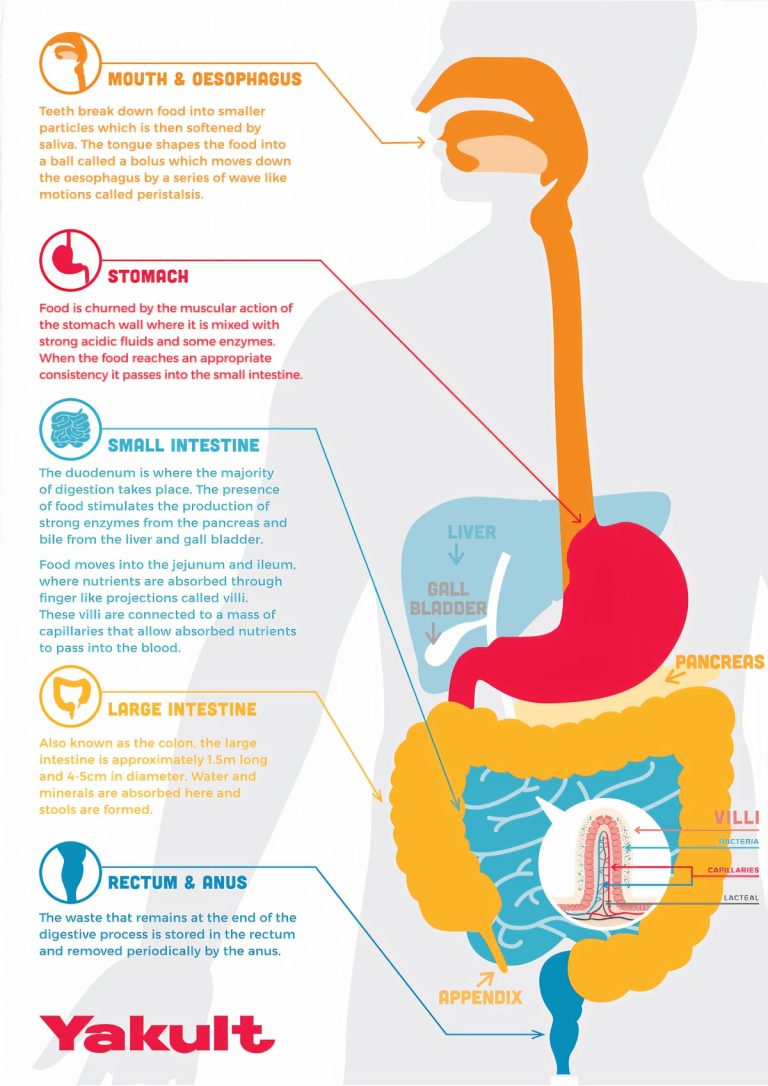
Figure 1. Digestive System Infographic (4).
The gut microbiota includes trillions of microorganisms, such as bacteria and fungi, and forms an important part of our gut microbiome (3). Many of these microorganisms are beneficial and help support normal digestion, immune function, and overall health.
Maintaining a healthy balance of gut microbiota is an important part of good gut health. Many factors, including our diet and lifestyle, can influence this balance (5,6). When the gut microbiota becomes imbalanced or disturbed, it may contribute to poor gut health and affect different aspects of our wellbeing. So, what are some signs that our gut might be out of balance?
Signs Your Gut May Be Out of Balance
Gut health may affect how we feel in different ways. Some signs to be aware of include digestive symptoms, sleep disturbances or fatigue, mood changes, and getting sick more frequently (5).
The infographic below provides a quick overview of these signs.

Figure 2. Signs Your Gut May Be Out of Balance.
What Can You Do to Support Gut Health?
What we eat and how we live can influence our gut microbiota, but making small and healthy changes over time can help support a balanced and healthy gut.
Eat more fibre-rich foods
Fibre plays an important role in keeping our digestive system healthy and provides fuel for beneficial bacteria in our gut. Include a variety of fibre-rich foods in your diet, such as fruits, vegetables, legumes, wholegrains, nuts and seeds (5).
Eat a variety of foods
Different foods provide different nutrients and types of fibre for our gut. Eating a wide variety of foods, particularly plant-based foods, can help support a diverse gut microbiota (5,10). Try including a variety of food types and colours in your meals throughout the week, such as green, orange, red, yellow, purple and white foods (11).
Limit ultra-processed foods
A diet high in ultra-processed foods and low in fibre-rich whole foods may not provide the variety of nutrients that support gut health (10). Try to choose fresh and minimally processed foods more often, while limiting ultra-processed foods such as carbonated drinks, confectionery, processed meats, pastries and many packaged snacks (5).
Include fermented foods
Fermented foods such as yoghurt, sourdough, kombucha and kefir can be included as part of a healthy, balanced diet and may contain live microorganisms (5). Research suggests that some fermented foods may support the digestive system and improve gut microbiota diversity (12-14).
Some fermented foods also contain probiotics. Probiotics are specific live microorganisms that, when consumed in adequate amounts, provide a health benefit (15). Different probiotic strains can have different effects. For example, Yakult is a probiotic fermented drink that contains the unique Lacticaseibacillus paracasei Shirota (LcS) strain, which helps support gut microbiota balance and bowel regularity (16).
Interested in learning more about probiotics? Read our previous blog, Probiotic and Prebiotics: What’s the difference?
Stay hydrated
Drinking enough water supports normal digestive function and helps keep stools soft, making them easier to pass (5). As a general guide, Australian adults need around 2.6 L (10 cups) of fluids per day for males and 2.1 L (8 cups) per day for females, although individual needs may vary (17).
Build healthy lifestyle habits
Gut health is not only influenced by what we eat. Regular physical activity, managing stress, and getting enough quality sleep, around 7 to 9 hours a night for most adults (18), can also help support a healthy gut and gut microbiota (5).
Seek help from professionals if needed
Digestive symptoms can happen from time to time. However, if your symptoms persist, get worse, or interfere with your daily life, speak with your doctor or another qualified health professional for advice.
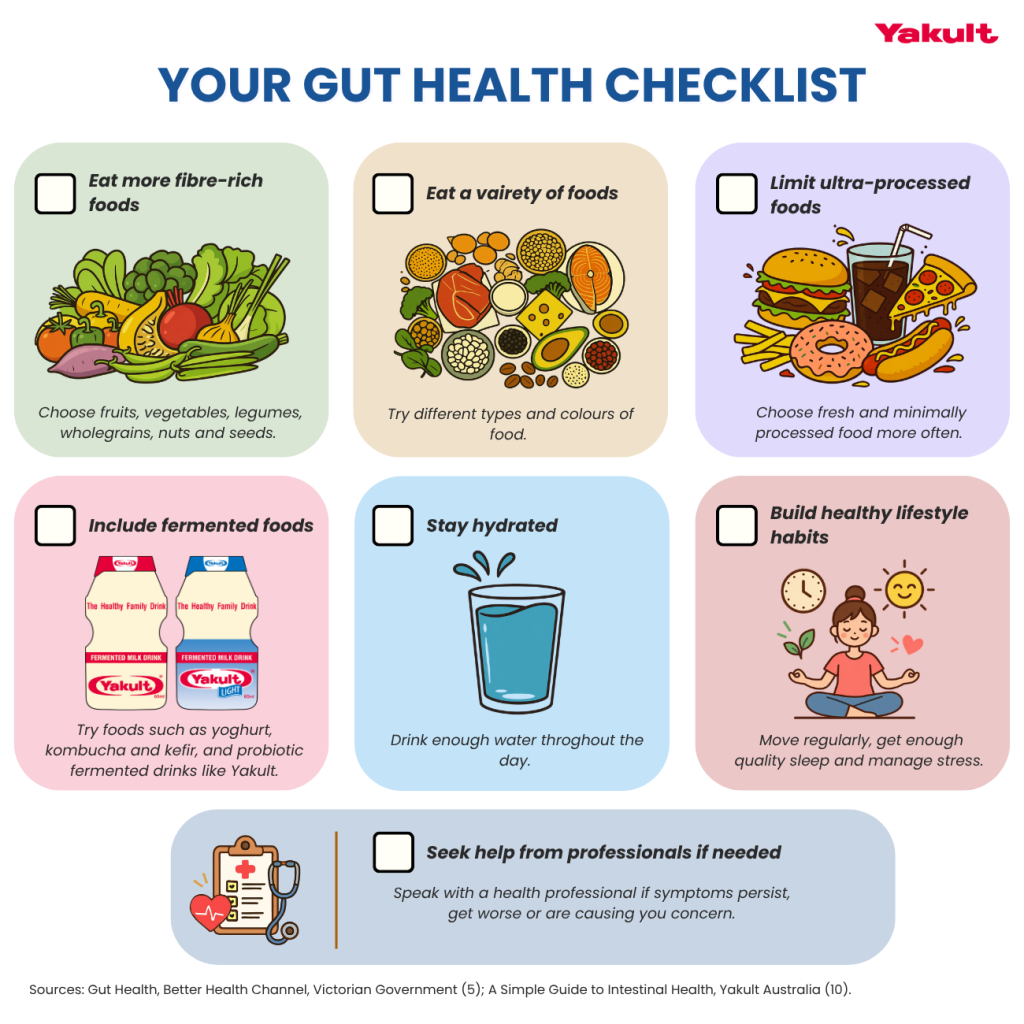
Figure 3. Your Gut Health Checklist.

References:
- Yakult Honsha. Philosophy & Slogan [Internet]. Tokyo: Yakult Honsha Co., Ltd; [cited 2026 Sep 18]. Available from: Philosophy & Slogan|Company Profile|Yakult
- Marco ML, Cunningham M, Bischoff SC, Clarke G, Delzenne N, Lewis JD, et al. The International Scientific Association for Probiotics and Prebiotics (ISAPP) consensus statement on the definition and scope of gut health. Nat Rev Gastroenterol Hepatol. 2026;23:432-448. doi: https://doi.org/10.1038/s41575-026-01176-x
- Valdes AM, Walter J, Segal E, Spector TD. Role of the gut microbiota in nutrition and health. BMJ. 2018;361:k2179. doi:10.1136/bmj.k2179
- Yakult Australia. Digestive health [Internet]. Dandenong South (VIC): Yakult Australia Pty Ltd; [cited 2026 Sep 21]. Available from: https://www.yakult.com.au/digestive-health/
- Department of Health, State Government of Victoria. Gut health [Internet]. Melbourne (VIC): State Government of Victoria; 2026 [cited 2026 Sep 21]. Available from: Gut health | Better Health Channel
- Healthdirect Australia. Gut health [Internet]. Sydney (NSW): Healthdirect Australia; 2025 [cited 2026 Sep 21]. Available from: Gut health – prebiotics, foods, microbiome | healthdirect
- Han M, Yuan S, Zhang J. The interplay between sleep and gut microbiota. Brain Res Bull. 2022;180:131-146. doi:10.1016/j.brainresbull.2021.12.016.
- Diotaiuti P, Misiti F, Marotta G, Falese L, Calabrò GE, Mancone S. The gut microbiome and its impact on mood and decision-making: a mechanistic and therapeutic review. Nutrients. 2025;17(21):3350. doi:10.3390/nu17213350.
- Yoo JY, Groer M, Dutra SVO, Sarkar A, McSkimming DI. Gut microbiota and immune system interactions. Microorganisms. 2020;8(10):1587. doi:10.3390/microorganisms8101587.
- Yakult Australia. A simple guide to intestinal health [Internet]. Dandenong South (VIC): Yakult Australia Pty Ltd; 2024 [cited 2026 Sep 21]. Available from: Yakult Intestinal Health Guide
- National Health and Medical Research Council. Australian dietary guidelines summary [Internet]. Canberra: National Health and Medical Research Council; 2013 [cited 2026 Sep 26]. Available from: https://www.eatforhealth.gov.au/sites/default/files/files/the_guidelines/n55a_australian_dietary_guidelines_summary_book.pdf
- Marco ML, Sanders ME, Gänzle M, Arrieta MC, Cotter PD, De Vuyst L, et al. The International Scientific Association for Probiotics and Prebiotics (ISAPP) consensus statement on fermented foods. Nat Rev Gastroenterol Hepatol. 2021;18(3):196-208. doi:10.1038/s41575-020-00390-5.
- Aslam H, Marx W, Rocks T, Loughman A, Chandrasekaran V, Ruusunen A, et al. The effects of dairy and dairy derivatives on the gut microbiota: a systematic literature review. Gut Microbes. 2020;12(1):1799533. doi:10.1080/19490976.2020.1799533.
- Wastyk HC, Fragiadakis GK, Perelman D, Dahan D, Merrill BD, Yu FB, et al. Gut-microbiota-targeted diets modulate human immune status. Cell. 2021;184(16):4137-4153.e14. doi:10.1016/j.cell.2021.06.019.
- Hill C, Guarner F, Reid G, Gibson GR, Merenstein DJ, Pot B, et al. Expert consensus document: The International Scientific Association for Probiotics and Prebiotics consensus statement on the scope and appropriate use of the term probiotic. Nat Rev Gastroenterol Hepatol. 2014;11(8):506-14. doi:10.1038/nrgastro.2014.66.
- Yakult Australia. Benefits [Internet]. Dandenong South (VIC): Yakult Australia Pty Ltd; 2024 [cited 2026 Sep 21]. Available from: Yakult Australia – Benefits
- Healthdirect Australia. Drinking water and your health [Internet]. Sydney: Healthdirect Australia; 2025 [cited 2026 Sep 26]. Available from: Drinking water and your health | healthdirect
- Healthdirect Australia. Sleep [Internet]. Sydney: Healthdirect Australia; 2023 [cited 2026 Sep 26]. Available from: Sleep – stages, tips, disorders, apnoea | healthdirect